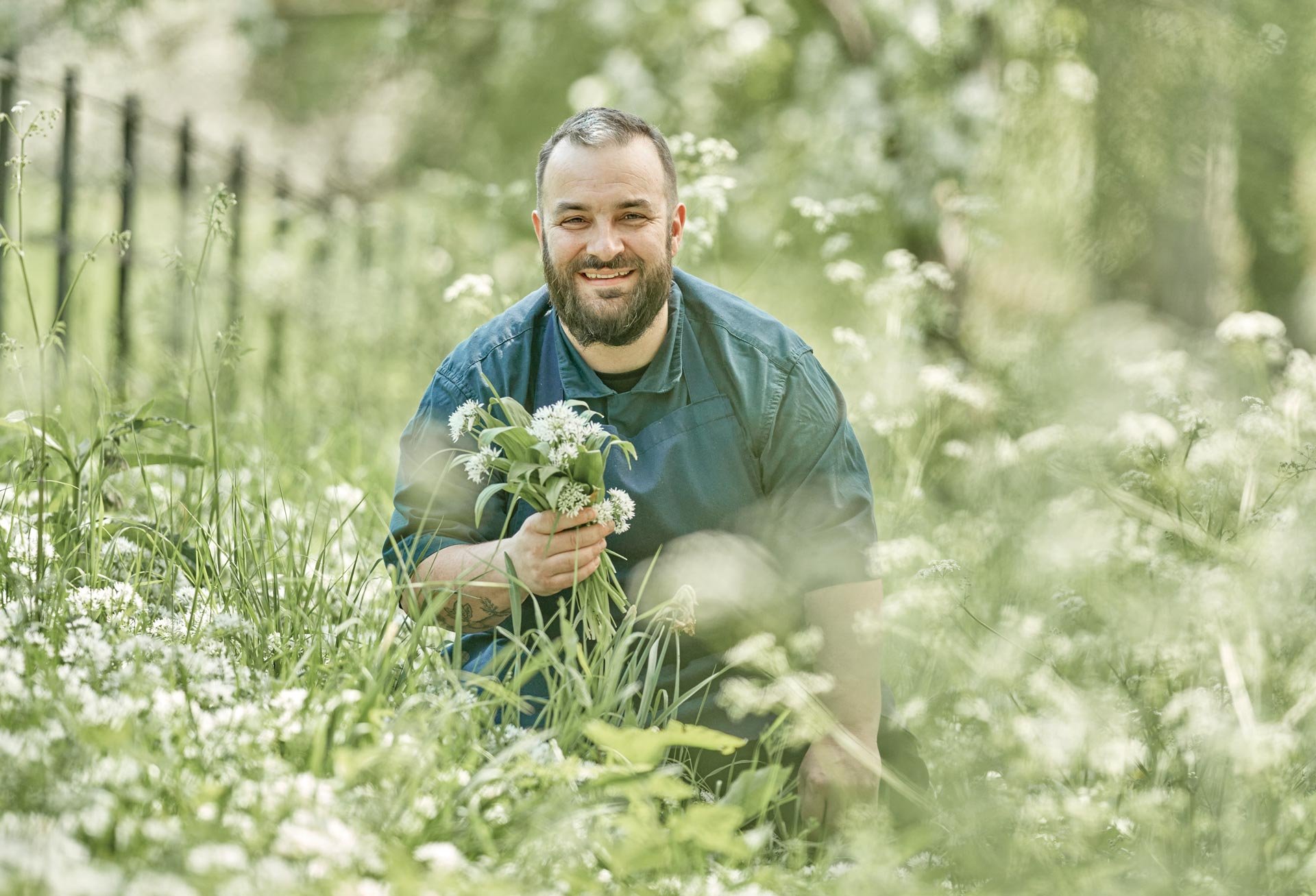
Iford Manor Kitchen’s executive chef Matthew Briddon introduces Rosanna Rothery to spring’s most delicious culinary accompaniment
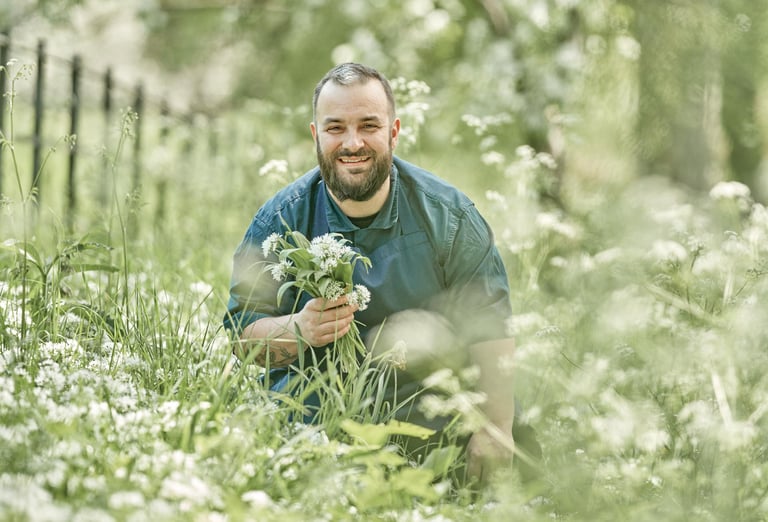
Spring is supremely generous to foragers such as Iford Manor executive chef Matthew Briddon: wild greens are everywhere and easy to find. At a time of year when everything is shooting, budding and bursting forth, they advertise themselves as sweet and succulent contenders for the culinary pot.
One of Matthew’s springtime favourites is wild garlic. Sometimes known as ramson, bear garlic and stinking jenny, it grows prolifically across Iford Manor’s idyllic estate in Somerset and Wiltshire. It’s at its best during the ‘‘hungry gap’’ period in early spring when the usual garden greens are scarce and there’s generally less veg to harvest.
Matthew only has to walk a few metres from the Manor Kitchen to spot the white starry flowers and tulip-like stems. The wild garlic’s bosky aroma, however, announces its presence long before he gets near enough to harvest it. Iford’s stunning gardens are an enchanting sanctuary in spring when the plant’s rich, earthy scent hangs enticingly beneath boughs laden with blossoms.
‘Damp and shady woodlands, riverbanks and hedgerows are the best hunting grounds for wild garlic, which you can find across the country at this time of year,’ says Matthew. ‘At Iford, we are fortunate that the Grade I-listed gardens are full of it.’
Sustainable harvest
Although its glossy, spear-like leaves can look a bit like the (highly poisonous) lily of the valley, wild garlic’s feisty aroma puts you in no doubt that you have the right plant. In places where it grows abundantly, it would be perfectly possible to dig up the young, tiny bulbs and use them in dishes like spring-vegetable soup. Matthew, however, prefers to sustainably harvest handfuls of the leaves, which have a subtle garlicky flavour.
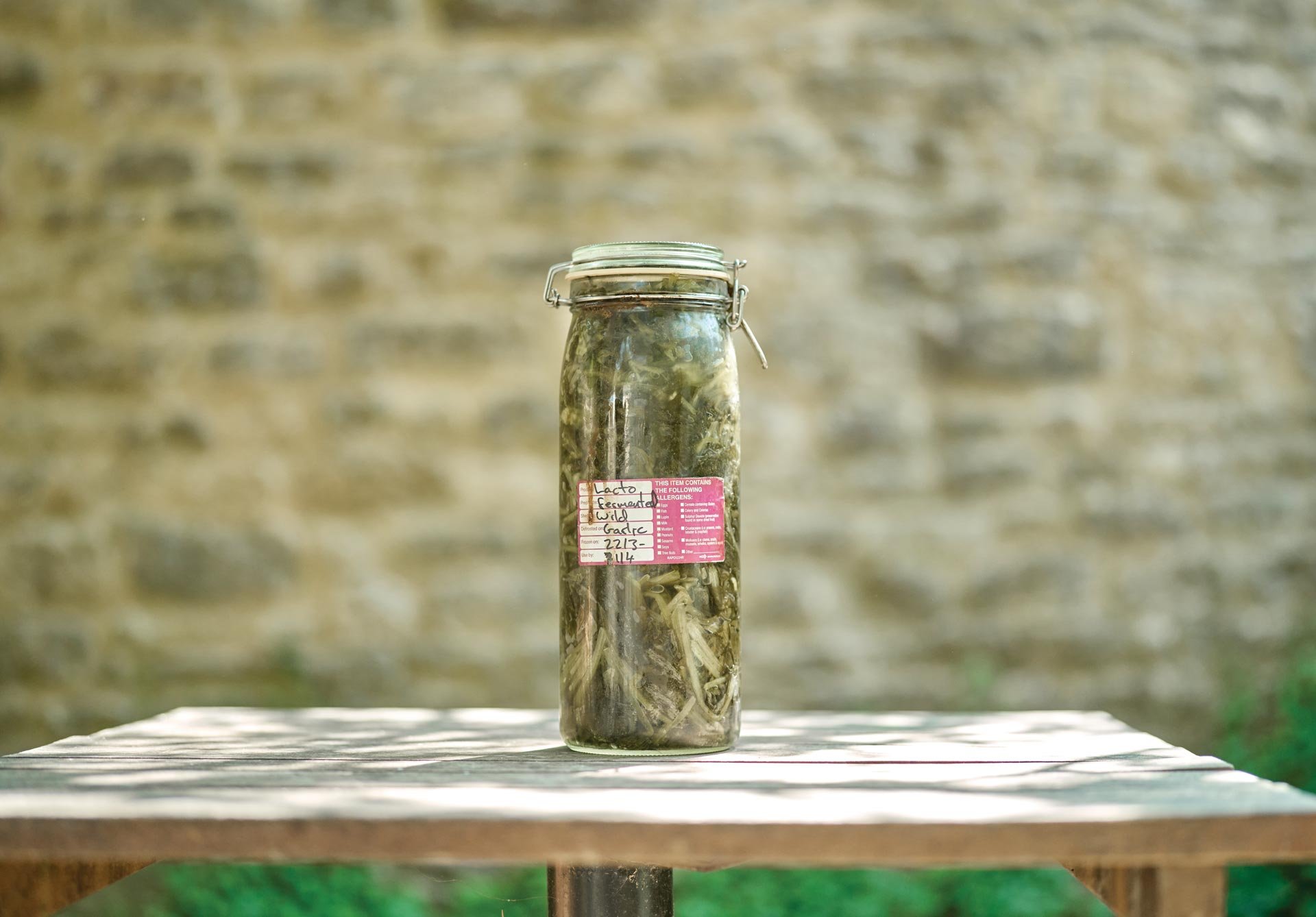
‘We use scissors to snip the long, bright-green leaves near the ground, leaving the bulbs intact to regrow,’ he says. ‘We often ferment them to preserve them so we have the flavour for longer, but you can also eat them raw. There is so much at Iford that we take a big harvest.’
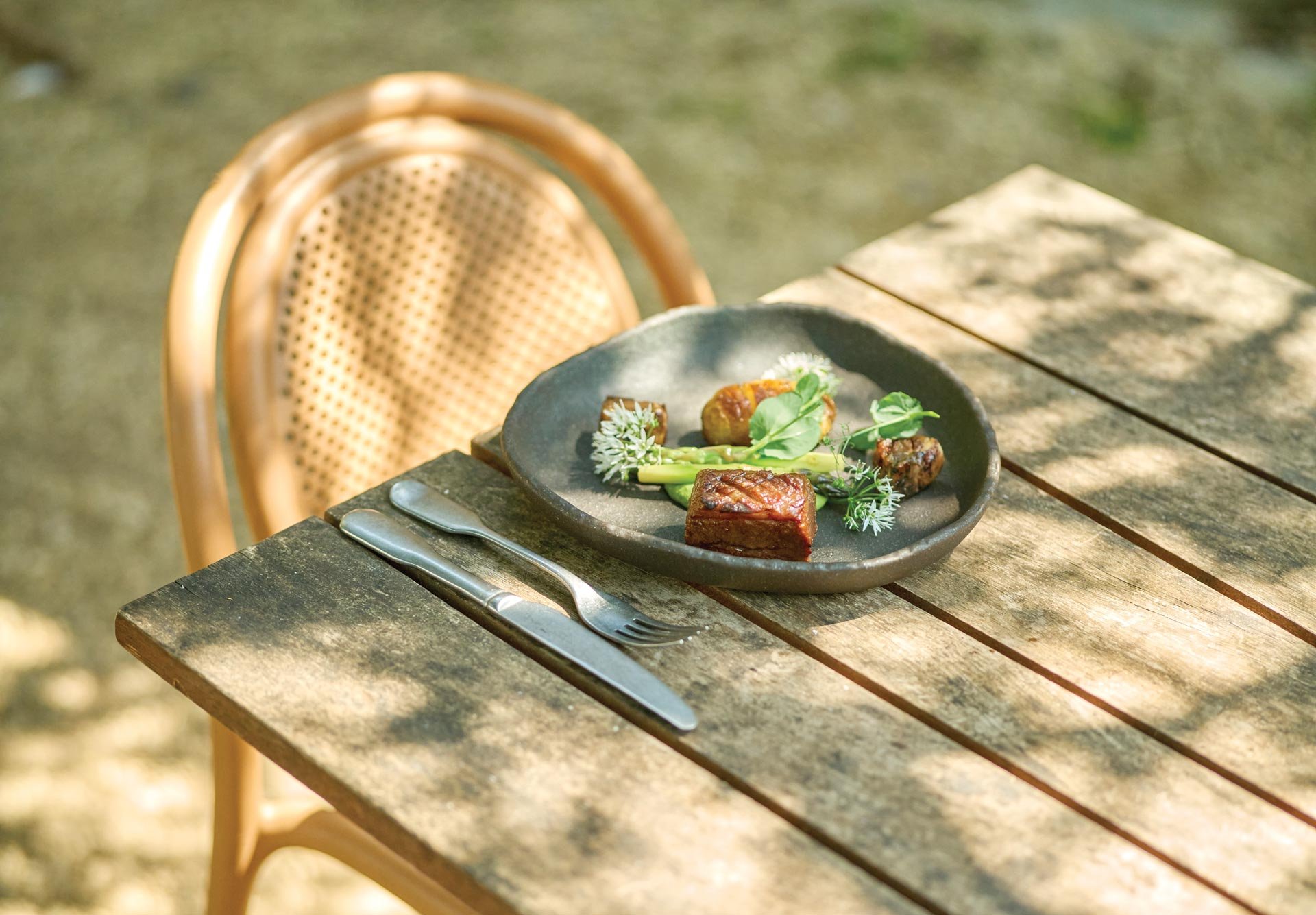
Matthew employs wild garlic across a selection of Manor Kitchen’s rustic dishes, which celebrate ingredients grown, reared or foraged on the 1000-acre estate.
‘The flowers are amazing to eat raw in salads,’ he says. ‘We also make wild-garlic capers from the seeds, which go supremely well with fish.’
Surprisingly, wild garlic’s taste is milder than its pungent allium aroma would suggest. Once its strong odour has captured your interest out in the wild, it calms down considerably when you bring it into the kitchen and cook with it. Matthew uses its delicate and pervasive flavour in pasta sauces, purees, oils, butters, charcuterie and pesto.
Fabulous fermented
In Dorset, wild garlic is sometimes referred to as devil’s posy, and Matthew has a culinary trick up his sleeve that makes it devilishly moreish. By fermenting wild garlic, he not only extends its life in the kitchen but adds a depth and sweet pungency to its flavour profile. It’s utterly delicious served with hunks of cheddar and sourdough crackers but will pair happily with just about anything.
‘The best way to ferment it is to use two per cent of its weight in salt,’ says Matthew. ‘Massage the salt into the chopped wild garlic and keep it at room temperature in an airtight container for four days. Then all it needs is to be rinsed and stored in the fridge.’
His final word of advice on getting the best out of wild garlic when preparing it at home? Treat it lightly.
‘Don’t overcook it,’ he says. ‘That way, your fermented or recently plucked wild garlic will make great accompaniments to pasta dishes, omelettes, soups and wilted greens.’
How to ferment wild garlic
- Pick young leaves, leaving the bulbs in the ground to grow on.
- Rinse the leaves in cold water to remove any debris, then chop them roughly.
- Weigh the leaves, work out two per cent of the weight of the leaves, then weigh out salt to that weight.
- Put everything in a large bowl and massage the salt into the leaves for 2 to 3 minutes.
- Transfer everything to an airtight container and store at room temperature for four days to ferment.
- After four days, rinse the salt off the leaves and stuff them in a Kilner jar or similar. Keep it in the fridge to stop the fermentation process.
Enjoyed this feature? Check out our wet walnuts and fermented fruits feature.