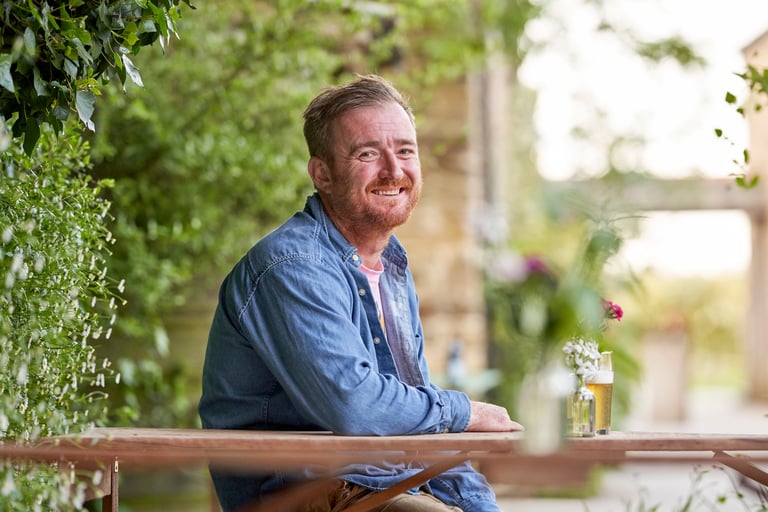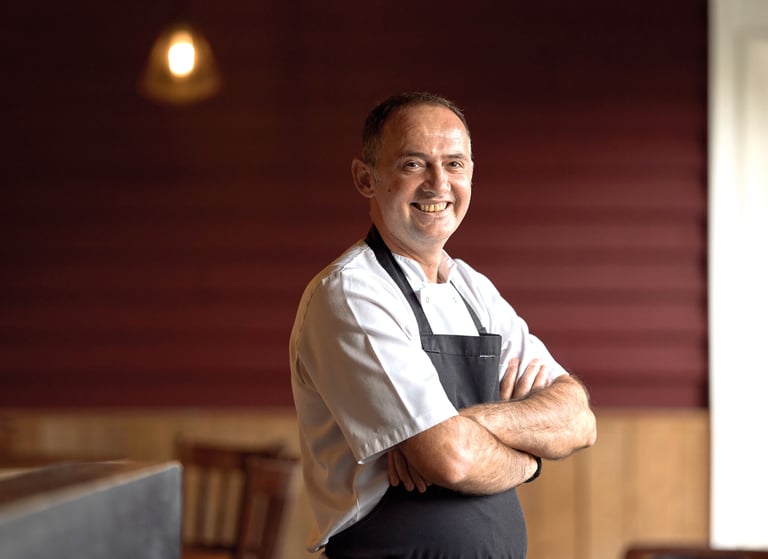
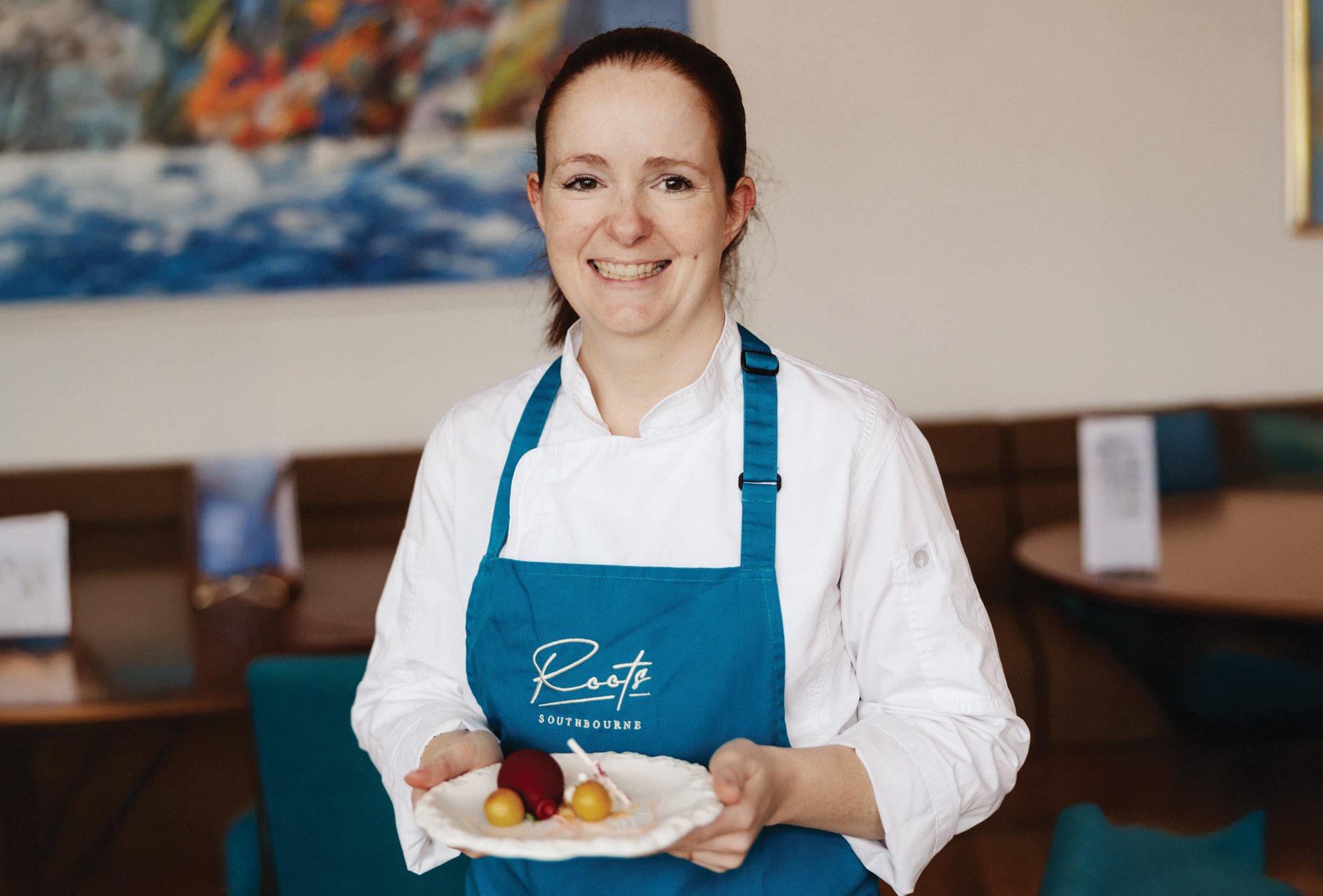
Stacey Bretschneider, pastry chef and co-owner of Restaurant Roots in Bournemouth, proves crafting gluten-free pastry can be deliciously achievable, says Selena Young
Whether you’re coeliac yourself, cook regularly for ‘free-from’ friends and family or are simply curious about eating gluten-free, you’ll have noticed how many more options there are now for those following a GF diet. Yet, while there are some decent alternatives to be found in supermarkets and restaurants, gluten-free bakes are still sometimes seen as poor relations to their traditional counterparts.
The reason it’s tough to craft gluten-free treats is because gluten (a protein) is an important binding agent. However, pastry queen Stacey Bretschneider of Restaurant Roots in Bournemouth is proof that – with the right intel and ingredients – GF bakes can be utterly delicious and highly successful.
Practice makes perfect
Stacey’s pastry cheffing journey began when she was just a little cruffin. ‘I was interested in pastry from a young age and constantly experimented with recipes,’ she recalls. ‘My family were particularly fond of my golf-ball-size chocolate truffles, which I’d have to hide at the back of the fridge.’
The hobby blossomed into a career when she secured a Royal Academy of Culinary Arts Specialised Chef Scholarship, which included a placement at Hartwell House & Spa in Buckinghamshire.
‘I was lucky enough to work under some fabulous pastry chefs – each with their own style and strengths, and I naturally gravitated towards that part of the kitchen.’
A job at Langshott Manor in Surrey provided further experience. There, surrounded by berries, herbs and Edwardian-era fruit trees, she honed a style rooted in seasonality and discovery. ‘It was such a pleasure to create desserts using that abundance of wild produce,’ she says.
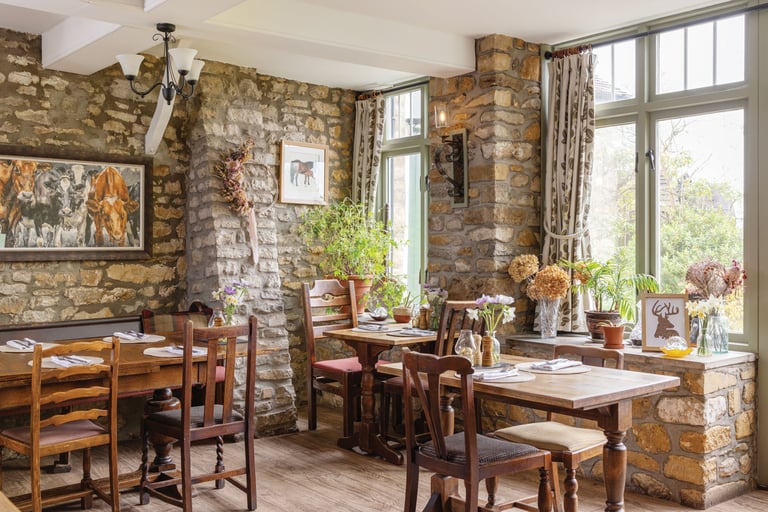
The next chapter saw Stacey and husband Jan Bretschneider (they met while working at Hartwell House) return to her hometown of Bournemouth to open Restaurant Roots. The intimate dining experience has now been an insider’s favourite for over a decade.
This is where Stacey flexes her formidable pastry muscles, including crafting desserts for numerous types of allergen-avoidant customers.
Not a simple swap
For many home cooks, gluten-free baking is a case of replacing wheat flour with a GF alternative and hoping for the best. But, as Stacey explains, it’s rarely that straightforward.
‘People assume they can simply swap wheat flour for gluten-free flour in a recipe,’ she says. ‘But it’s much lighter and requires more moisture. In fact, it behaves differently.’
Gluten is responsible for structure, elasticity and stability. Without it, dough can collapse, crumble or become excessively dry.
‘There’s a lot of science in pastry,’ explains Stacey. ‘Each ingredient has a purpose: to sweeten, soften, give structure or provide texture. Once you know the function of the ingredient you’re replacing, you need to find something that ticks the same box. The tricky bit is doing that while getting the quantities right.’
That’s why, for beginners, she advises resisting the urge to improvise too soon. ‘Start with specifically gluten-free recipes until you feel comfortable with the new ingredients and methods.’
Flaky fundamentals
One of the biggest obstacles in gluten-free baking is building structure, which often means introducing emulsifiers or ingredients that mimic gluten’s binding properties.
‘Many GF bread and pastry recipes call for emulsifiers like xanthan gum, guar gum or psyllium husk,’ she says. ‘This is to replace the gluten, which holds the structure while the item is rising and prevents it from collapsing. Some ready-made GF flour blends contain these elements already, but you need to check the ingredients.’
Moisture is another crucial factor. Gluten-free flours absorb liquid differently and take more time to hydrate fully.
‘They require about ten per cent more moisture,’ she says. ‘And some have a better texture when they’ve had more time to absorb. You should rest the batter for 30 minutes before baking, especially when using rice flour.’
If there’s one mistake Stacey sees time and again, it’s overcompensation.
‘When a dough seems too wet, it’s automatic to add more flour,’ she says. ‘With gluten-free baking, that can lead to very dry, crumbly and unpleasant dough.’
So patience is key: let the dough rest and allow the flour to absorb moisture. ‘Then add as little flour as possible when rolling out,’ she advises.
And, for that all-important flakiness, Stacey says: ‘Use extremely cold fat, the right amount of emulsifier – too much and it will be chewy, too little and it will fall apart – and don’t overwork the dough.’
On a roll
When it comes to gluten-free adaptation, not all pastries are created equal. Some lend themselves naturally to the process; others remain a challenge – even for professionals.
‘Shortcrust and sweet pastry are the easiest to adapt,’ she says. ‘Homemade puff pastry is more difficult. When making a gluten-free version, the issues are often a result of its laminated structure.’
When it comes to flour blends, there’s no one-size-fits-all solution. ‘It depends on what you are making,’ she explains. ‘The most readily available are Dove’s Farm gluten-free flours, but I like adding other flours, such as coconut, chestnut or gram for texture or flavour.’
And sometimes, the best solution is not to replace flour at all. ‘One of the things people think they’ll miss out on when eating gluten-free is cake,’ she says. ‘But there are some amazing recipes that don’t use any flour and are great.’ Her go-to is citrus polenta cake served with a spoonful of mascarpone cream.
Stacey asserts that gluten-free baking isn’t about restriction; it’s about rethinking the rules. ‘There are so many good alternatives out there. You just have to keep experimenting to find what you like.’